



Tài xỉu online uy tín - Top game kiếm tiền uy tín 2026
Trong hàng ngàn game đổi thưởng được cho ra mắt, không có mấy cái tên đủ sức để giữ chân người chơi lâu dài. Thế nhưng, Tài Xỉu chính là ngoại lệ trong số đó khi luôn lọt top game hot, thu hút nhiều người chơi tại các nền tảng lớn. Nếu đang tìm kiếm top game kiếm tiền online uy tín 2026 thì đừng bỏ qua siêu phẩm này nhé.
Hiểu rõ về trò chơi Tài Xỉu

Tài Xỉu là trò chơi cá cược bằng 3 viên xúc xắc. Người chơi có nhiệm vụ dự đoán tổng điểm của ba viên xúc xắc sau khi được lắc đều là bao nhiêu rồi đặt cược vào cửa phù hợp. Nếu dự đoán tổng điểm từ 4-10 thì đặt vào cửa Xỉu, còn dự đoán tổng điểm trong khoảng từ 11-17 thì đặt vào cửa Tài.
Mỗi ván Taixiu diễn ra rất nhanh, chỉ trong khoảng 30 giây người chơi đã biết được kết quả thắng, thua. Chỉ cần thắng cược sẽ nhận ngay khoản thưởng hậu hĩnh theo tỷ lệ quy định của nhà cái hoặc cổng game.
Khi tìm hiểu về trò chơi, anh em cần nắm thêm một số thông tin quan trọng như sau:
| Hạng mục | Thông tin chi tiết |
| Loại hình | Trò chơi dự đoán kết quả xúc xắc |
| Số viên xúc xắc sử dụng | 3 viên (mỗi viên có 6 mặt được ký hiệu từ 1-6) |
| Số cửa cược | 2 cửa (Tài và Xỉu) |
| Thời gian mỗi phiên | 30 – 60 giây |
| Tỷ lệ trả thưởng | 1:1 – 1:2 (tùy vào sân chơi) |
Những hình thức chơi Tài Xỉu phổ biến hiện nay
Taixiu có đến 04 hình thức chơi phổ biến như sau:
Tài Xỉu truyền thống
Là hình thức chơi trực tiếp, thường được tổ chức tại casino hoặc những nơi tụ tập đông người. Với hình thức này, anh em có thể tự theo dõi toàn bộ quá trình và đặt cược trực tiếp ngay trên bàn. Tuy nhiên, cách thức tổ chức truyền thống tiềm ẩn rủi ro về vấn đề pháp luật, nếu không may bị bắt sẽ phải nộp phạt.
Tài Xỉu online
Chính là phiên bản nâng cấp so với hình thức truyền thống ở trên. Với phiên bản online, anh em có thể theo dõi và đặt cược thông qua màn hình máy tính, điện thoại mà không cần đến trực tiếp địa điểm chơi. Cách này sẽ giúp tiết kiệm tối đa thời gian đi lại và không sợ bị công an ‘’tóm’’.
Tài xỉu MD5

Cũng là hình thức chơi online, nhưng được kết hợp thêm thuật toán mã hóa MD5 để đảm bảo tính ngẫu nhiên của kết quả. Trước và sau phiên chơi Taixiu MD5, trên màn hình sẽ hiển thị chuỗi mã hóa để anh em có thể chủ động kiểm tra tính minh bạch của trò chơi.
Tài xỉu livestream
Hình thức kết hợp giữa cá cược online và livestream trực tiếp. Khi tham gia vào ván chơi livestream, anh em có thể theo dõi toàn bộ quá trình lắc xúc xắc qua màn hình livestream rồi đưa ra quyết định đặt cược vào cửa tương ứng. Hình thức này mang đến trải nghiệm chân thực như đang được tham gia trực tiếp vào bàn chơi thật.
Phổ cập luật chơi Taixiu cơ bản
Trước khi bắt đầu tham gia vào ván cược, anh em cần nắm được những quy luật cơ bản như sau:
Nguyên tắc lắc xúc xắc & xác định kết quả
Khi ván Tài Xỉu bắt đầu, hệ thống sẽ đặt 3 viên xúc xắc vào một chiếc đĩa, úp bát lên rồi lắc đầu. Sau khi lắc xong sẽ mở bát ra để xác định kết quả của trò chơi.
Trường hợp thắng, thua của các cửa cược

Số điểm trên mặt ngửa của 3 viên xúc xắc sẽ được cộng lại để xác định kết quả của trò chơi. Các cửa cược sẽ thắng khi:
- Cửa Tài: Khi tổng điểm 3 viên xúc xắc nằm trong khoảng từ 11-17.
- Cửa Xỉu: Khi tổng điểm 3 viên xúc xắc nằm trong khoảng từ 4-10.
Cơ chế trả thưởng của game
Sau khi kết quả được công bố, hệ thống sẽ trả thưởng cho người đã đặt cược vào cửa thắng. Tiền thưởng sẽ được trả theo tỷ lệ quy định từ đầu của sân chơi.
Mẹo cược Tài Xỉu bất bại từ các cao thủ
Tham gia chơi Taixiu online thì bất kỳ ai cũng muốn nhận thưởng về tay. Và để thu lợi nhuận từ game thì không thể đặt cược bừa bãi, mà nên áp dụng những mẹo hữu ích như sau:
Đánh theo cầu bệt
‘’Cầu bệt’’ chính là thuật ngữ chỉ kết quả Tài hoặc Xỉu xuất hiện liên tiếp nhiều ván. Một khi cầu này xuất hiện thường chạy ổn định từ 5-6 ván, chỉ cần bắt đúng lúc chắc chắn sẽ ‘’ăn tiền’’.
Ví dụ: Theo dõi kết quả, thấy 4 phiên gần nhất đã về Xỉu. Vậy hãy tiếp tục đánh Xỉu cho đến khi đổi sang cửa Tài thì dừng lại.
Đánh Tài Xỉu theo cầu 1-1

‘’Cầu 1-1’’ chính là thuật ngữ chỉ dạng kết quả Tài và Xỉu xuất hiện xen kẽ liên tục trong nhiều ván. Theo những người chơi có nhiều kinh nghiệm, họ khẳng định chuỗi này thường xuất hiện ổn định từ 5-6 phiên. Vậy khi, chỉ cần thấy dấu hiệu cầu 1-1 xuất hiện thì vào tiền đặt cược sẽ có thưởng.
Ví dụ: Trong 3 phiên gần nhất, kết quả đã về lần lượt là Xỉu – Tài – Xỉu. Đến phiên thứ 4 hãy vào tiền đặt cho Tài. Nếu phiên thứ 4 về Tài, đến phiên thứ 5 hãy cược cho Xỉu.
Đánh đảo khi cầu gãy
Cầu bệt và cầu 1-1 có thể gãy bất cứ khi nào. Khi cầu gãy, hãy đánh đổi cửa trong 1-2 phiên liên tiếp để tận dụng cơ hội nhận thưởng khi hình thành cầu mới.
Ví dụ: Chuỗi bệt Xỉu dài 5 phiên vừa gãy → đánh Tài liên tục 1-2 phiên tiếp theo.
Mẹo cược bảo toàn lợi nhuận
Nếu muốn bảo toàn lợi nhuận trong quá trình chơi, anh em hãy giữ nguyên tắc sau:
- Ván trước thắng → ván sau tăng cược.
- Ván trước thua → ván sau giảm cược.
Tăng cược khi thắng sẽ giúp anh em tận dụng vận đỏ, thu lãi nhanh chóng. Còn giảm cược khi thua chính là cách để bảo toàn lợi nhuận những ván trước cực tốt.
Top game tai xiu online uy tín & thưởng cao

Muốn chơi Taixiu online uy tín và thưởng cao trong năm 2026 này, anh em đừng bỏ lỡ top game hot sau đây:
Top 1: Go88
- Cổng game phổ biến tại Việt Nam với lượng người chơi đông đảo.
- Cung cấp bàn TaiXiu online đa dạng.
- Tỷ lệ thưởng cao, lên đến 1:1.95.
- Giao diện hiện đại, dễ thao tác, đặt cược mượt mà trên máy tính, điện thoại.
Top 2: Sunwin
- Trang game online hoạt động ổn định.
- Có nhiều phòng cược để lựa chọn.
- Tốc độ ván chơi nhanh, phù hợp với những anh em thích cược và nhận thưởng liên tục.
Top 3: Hitclub
- Tổ chức cược Tài Xỉu online minh bạch, công bằng.
- Có nhiều mức cược để lựa chọn.
- Tổ chức nhiều sự kiện giao lưu và chương trình khuyến mãi hậu hĩnh.
- Là sân chơi uy tín được nhiều cao thủ có tên tuổi lựa chọn.
Top 4: 789club
- Cung cấp kho game phong phú, nhiều sự lựa chọn khác ngoài Taixiu.
- Nhiều bàn chơi với đủ mức cược từ thấp đến cao.
- Có nhiều ưu đãi dành riêng cho tân thủ.
Top 5: B52 Club
- Tổ chức cược Tài Xỉu online 24/7, không phải chờ phiên.
- Người chơi đông đảo vào mọi khung giờ, cá cược rất sôi động.
- Nhịp cược nhanh, không phải chờ đợi.
Top 6: Rikvip
- Giao diện đơn giản, dễ thao tác và đặt cược.
- Bàn chơi đa dạng với nhiều mức cược, phù hợp với cả những người có vốn thấp.
- Có thưởng Jackpot, tần suất nổ cao.
Top 7: Iwin
- Nhiều bàn chơi với các mức cược khác nhau, phù hợp với cả tân thủ lẫn người có kinh nghiệm.
- Bảng lịch sử kết quả hiển thị rõ ràng, giúp anh em thuận tiện theo dõi và phân tích cầu.
- Bàn chơi luôn có nhiều người tham gia, tạo trải nghiệm cá cược rất sôi động.
Top 8: Win79
- Nền tảng tối ưu, chơi mượt mà trên cả máy tính lẫn điện thoại.
- Tính năng nhanh nhạy, tốc độ load nhanh, ít lỗi khi cược.
- Trả thưởng cạnh tranh cao và thường xuyên tung ra ưu đãi khủng.
Top 9: Nhatvip
- Nhiều hình thức chơi TaiXiu, có cả cách cược online cơ bản, MD5 và livestream.
- Mức cược không quá cao, dễ vào ván.
- Trả thưởng nhanh, sòng phẳng, không phải chờ đợi quá lâu.
Top 10: Zowin
- Bàn cược sôi động được tổ chức liên tục.
- Mức thưởng cao.
- Hũ lớn, nổ thường xuyên.
Hành động gây mất tiền cần tránh khi chơi Tài Xỉu
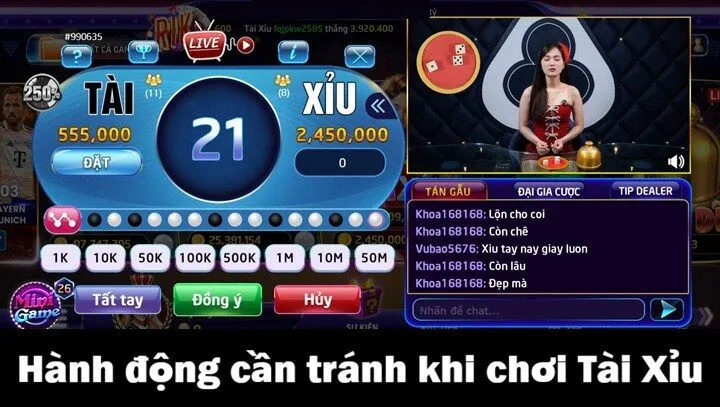
Trong quá trình đặt cược, một số hành động tưởng chừng như vô hại nhưng có thể khiến anh em mất nhiều tiền trong thời gian ngắn. Hãy chủ động tìm hiểu và tránh những hành động sai lầm như sau:
All-in vào 1 ván
All-in chính là hành động sai lầm lớn nhất. Dù anh em có chắc chắn với dự đoán của bản thân đến đâu đi chăng nữa thì Taixiu online cũng chỉ là trò chơi may rủi, không đảm bảo bất kỳ kết quả nào thắng chắc 100% được cả. Vậy nên, tuyệt đối không all-in để không bị ‘’mất trắng’’.
Chơi liên tục
Chơi liên tục trong thời gian dài (hơn 1 tiếng) có thể khiến anh em bị thiếu tỉnh táo, dẫn đến đưa ra quyết định sai lầm. Tốt nhất, hãy chơi theo phiên từ 15-20 phút để đủ khả năng đưa ra quyết định sáng suốt.
Dùng tool hack
Nhiều anh em xem quảng cáo và nghĩ tool hack thật sự có tác dụng nên đã bỏ tiền ra mua. Nhưng thực tế, đời thì luôn không như quảng cáo và tool hack không có bất kỳ tác dụng nào. Bởi kết quả Tài Xỉu được xác định hoàn toàn ngẫu nhiên nên không có bất kỳ loại tool nào dự đoán được.
Đặc biệt, dùng tool hack còn là hành động vi phạm tại các trang game. Hành động này có thể khiến tài khoản của anh em bị khóa vĩnh viễn và toàn bộ tiền thưởng sẽ bị thu hồi. Vậy nên, hãy chủ động tránh xa tool hack nhé.
Còn điều gì khiến người chơi thắc mắc về Tài Xỉu?
Tất tần tật những điều còn khiến anh em thắc mắc về game sẽ được giải đáp cặn kẽ ngay tại đây:
Không nạp tiền có thể chơi Taixiu online được không?
Có. Một số nền tảng cung cấp chế độ chơi thử miễn phí, anh em có thể trải nghiệm trước khi nạp tiền thật.
Game có giới hạn độ tuổi người chơi không?
Có. Các nền tảng yêu cầu người chơi đủ 18 tuổi trở lên để có đủ khả năng tự chịu trách nhiệm về hành vi của bản thân.
Kết quả game được xác định ngẫu nhiên hay theo quy luật?
Kết quả game được xác định ngẫu nhiên, không theo bất kỳ quy luật nào.
Đặt cược Tài Xỉu theo số đông có dễ thắng hơn không?
Đặt cược theo số đông không đảm bảo chắc thắng. Bởi vì kết quả của game là ngẫu nhiên, nên số đông chưa chắc đã đoán đúng.
Chơi Taixiu online có phạm pháp không?
Nếu chơi tại cổng game uy tín, đã được cấp phép thì sẽ được bảo đảm về vấn đề pháp lý.
Tài Xỉu chính là sự lựa chọn phù hợp với những anh em đang tìm kiếm trò chơi có tính giải trí cao và tạo cơ hội kiếm tiền tốt. Hãy chọn một sân chơi uy tín để đăng ký tham gia và bắt đầu trải nghiệm những ván cược đầy kịch tính nhé. Đừng quên áp dụng những mẹo hay được bật mí ở trên để luôn thắng lớn mỗi khi nhập cuộc nhé!
APP TÀI XỈU UY TÍN








MẸO SOI CẦU TÀI XỈU